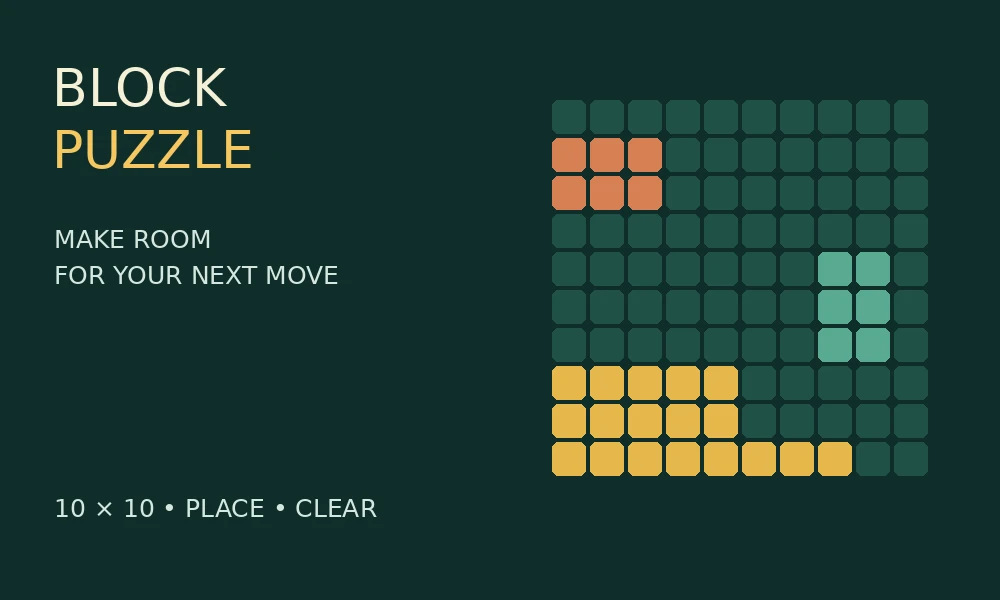
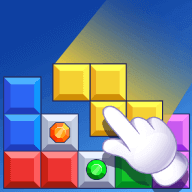
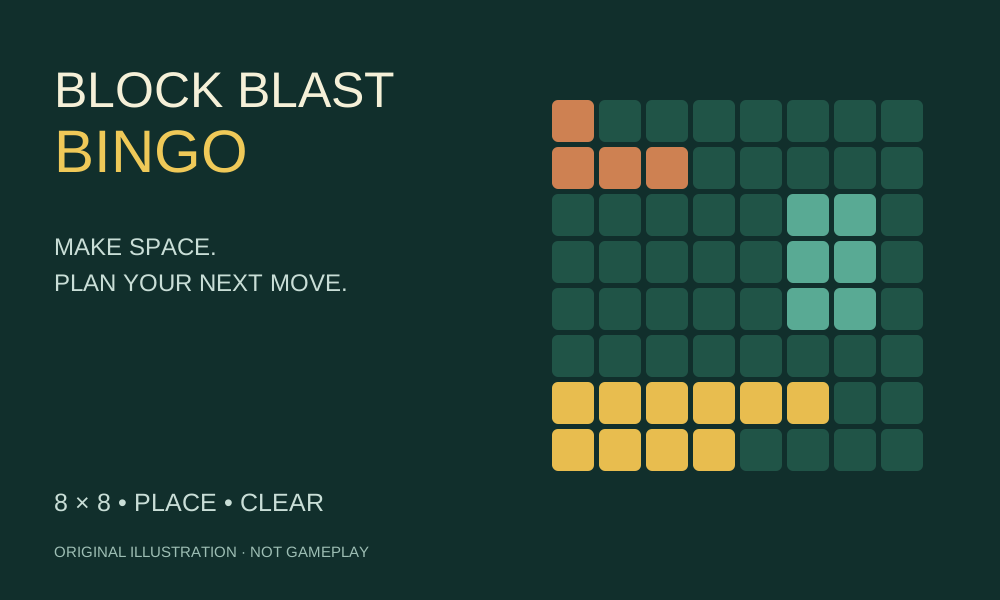
A board with plenty of empty squares can still leave you with nowhere useful to put a shape. Block Blast Bingo turns that small surprise into a spatial puzzle: drag connected blocks onto an 8×8 grid, complete rows or columns, and use the cleared space to keep your options open. Every placement changes the gaps that remain, so look beyond the first position that happens to fit.
This is the version hosted by GameZipper, with a score display and bingo-themed presentation. The challenge is arranging shapes, not marking randomly called numbers or playing cash bingo. If you enjoy Block Blast’s grid-placement decisions, try comparing several possible positions before releasing a piece. A tidy board is helpful only when its empty areas can accommodate the shapes you still need to place.
Press Play in the hosted game to begin. Look over the eight rows and eight columns, then compare the available shapes with the empty spaces before making your first placement.
Fit the complete shape
Drag an available piece onto empty squares. Every connected square must fit inside the board without overlapping an occupied cell; check the whole outline rather than just the point under your pointer.
Complete a row or column
Fill a complete horizontal row or vertical column to clear that line and open space again. Before placing the next piece, inspect how the newly cleared area changes your options.
Try a new approach
Watch the board and score as you continue placing pieces. To begin a fresh run, return to the game menu and choose New Game; use the clean board to test a different placement strategy.
FAQs ❓
Is this a falling-block game?
No. This version uses drag-and-drop placement on a board rather than steering a piece that falls from the top.
Which lines can I clear?
Complete horizontal rows and vertical columns on the 8×8 grid. The placement challenge is fitting whole shapes into the spaces available.
How do I start again?
Return to the game menu and select New Game. A fresh board lets you try a different arrangement instead of continuing the same crowded position.
Is this a cash-bingo game?
This page presents a block-placement browser puzzle, not a cash-play or wagering offer. The word Bingo is part of the game’s theme.
Why Play Block Blast Bingo? 🏆
Preserve a broad opening
A connected empty region is often more useful than the same number of scattered squares. Avoid creating isolated holes that only a particular small shape could fill.
Plan across both directions
Look for moves that bring a row and a column closer to completion together. Compare the other available pieces before committing; a tempting placement can block the space they need.
Slow down on a crowded board
Count the remaining squares and examine the shape of each gap. Focus on keeping useful space, rather than choosing a move only because it immediately increases the score.